| brucekluger.com |

USA Today, February 4, 2004 Politics 2004: Laugh and learn By Bruce Kluger
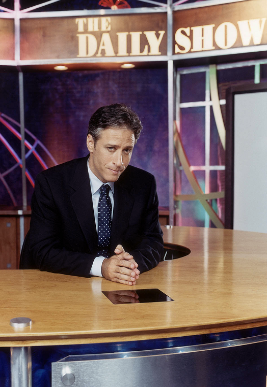
trying to be funny. Known for his no-bunk, all-sass approach to the news, the host of Comedy Central's The Daily Show was speaking to reporters about his program's planned coverage of the 2004 presidential election. "Our responsibility is to be the smartest, funniest show we could possibly be," said Stewart, accurately describing his irreverent laugh-fest. But then the comedian—the subject of a recent Newsweek cover story headlined, "Jon Stewart, Seriously Funny"—added this dubious bit of modesty: "We have no delusions of importance." Au contraire, funny man. A Pew study released last month shows that only 23% of Americans ages 18-29 now tune into the broadcast news networks for the latest on this presidential campaign. That's a 16-percentage-point drop since the calamitous 2000 Florida face-off. Instead, the survey found, an almost equal number of young adult viewers (21%) cull their knowledge of the candidates' stump speeches, position papers and landmark gaffes from TV's comedy shows—notably, Saturday Night Live and Stewart's nightly roundup. "For many young people," the study says, "the content of the jokes, sketches and appearances on these programs is not just a repeat of old information...27% of all respondents under age 30 say they learn things about the candidates and campaigns from late-night and comedy programming that they did not know previously." In other words, when The Daily Show's "Indecision 2004" segment describes Howard Dean as "half-man, half-monkey from Vermont"—or when Al Sharpton plays Johnnie Cochran, James Brown and Michael Jackson's father during his stint as host of SNL—a quarter of the country's younger voters are absorbing this information the way think-tank analysts sop up the latest Brookings Institution report. Is this the end of democracy as we know it? Not really. The one thing politics lacks— and desperately needs—is a sense of humor. Think about it: One of the most often-quoted "funny" comments made by a politician in the past 20 years occurred in 1984, when presidential candidate Walter Mondale borrowed from a then-popular Wendy's commercial to level his primary opponent, Gary Hart, with the zinger, "Where's the beef?" I'm no Al Franken, but that's not exactly a thigh-slapper. Furthermore, laughter always has helped Americans cope with their uneasiness about current events, especially when it comes to the fellow who holds the keys to the Oval Office. When John Kennedy was elected to the presidency in 1960, many Americans worried—about his Catholicism, his youth, his inexperience. But when a little-known nightclub comic named Vaughan Meader recorded an album in 1962 called The First Family, featuring a breathy Jackie and a pitch-perfect JFK impersonation, Americans embraced the lampoon and, along with it, their new, untested president. The LP was an overnight sensation. The tradition has continued—from the Smothers Brothers' smirking condemnation of the Johnson and Nixon administrations to Chevy Chase's stumbling incarnation of Gerald Ford on SNL to Jay Leno's rat-a-tat gags aimed at anyone who dares to put his or her name on a ballot. It's comforting to know that Americans still can laugh at the screwier machinations of democracy, even as we proudly trot off to the voting booth to engage in them. What's worrisome is the notion that comedy has begun to replace the news as opposed to leavening it. Unlike when I was a kid—when the day's events were recapped during the dinner hour by a Walter Cronkite, Harry Reasoner or Barbara Walters—the top stories now have become tailored to the myriad schedules, hair-splitting demographics and passionate political leanings of TV's viewers. As a result, the nightly (and morning and mid-day) news has transformed into an indiscernible potpourri of panel shows, partisan debates and clamorous shout- fests. This, the Pew study says, is one reason viewers have fled to the likes of Stewart. Thirty-eight percent of those surveyed, Pew says, believe the news is objective. That's down from the 62% who assumed the news was "free of partisan bias" in 1987. So when did the conventional news hour splinter into a thousand points of fight? Peter Hart, a media analyst for Fairness & Accuracy in Reporting, says partisan debate always existed beneath the surface of broadcast news, but now has become "the dominant programming model" in cable news. "Programmers were looking for a way to make sure people don't change the channel," Hart says, "and they settled on a solution: Tease the audience with a fight, rather than provide reasonable dialogue or timely information. In the end, they seek to inflame the passions that already exist in those viewers." Fans of this new era of "news delivery" argue that the transformation is a welcome reflection of the diversity of American thought. But when opinion and analysis effectively replace the story—when audacious propaganda dresses up as actual news—then we're headed for trouble. For example, last year "fair and balanced" Fox News covered the death of former South Carolina senator Strom Thurmond by running dewy-eyed pre-packaged eulogies that never used the word "segregation." A similar revisionist spin creeps between the lines of many Fox stories—from its coverage of the Iraq war to election 2004. So can we really blame serious news junkies—or ordinary concerned citizens—for turning to Jon Stewart this campaign season, if only in an effort escape the madness? Call it a new twist on that famous 1960s slogan, "turn on and tune out"—only in this case, it's "tune in and turn off." Or better still, maybe we've entered an era best described by a variation of another timeworn motto, namely: "It only hurts when I don't laugh."
|